Dias Launches Two Groundbreaking Technologies
October 22, 2026
SASKATOON, Saskatchewan – October 15, 2026 – Dias Geophysical, a global leader in advanced subsurface imaging, announces the commercial release of two new technologies: the DSTX (Deep Search Transmitter) and QAMT (Quantum Airborne MagnetoTellurics) to add to their already impressive lineup of mineral exploration innovations.
Developed through years of research, engineering, and field testing, the launch represents an important milestone for Dias Geophysical and its partners.
“Finding the critical mineral deposits needed for the future requires us to continually improve the technology we use in the exploration surveys for our clients,” said Dias President, Glenn Chubak. “DSTX and QAMT address two very different exploration challenges, but they share the same objective: providing our clients with better subsurface data so they can make better decisions, reduce exploration risk, and improve their probability of discovery success. We have built numerous technologies guided by one principle: everything we do must be best in class.”
DSTX: More Power for Deeper Exploration
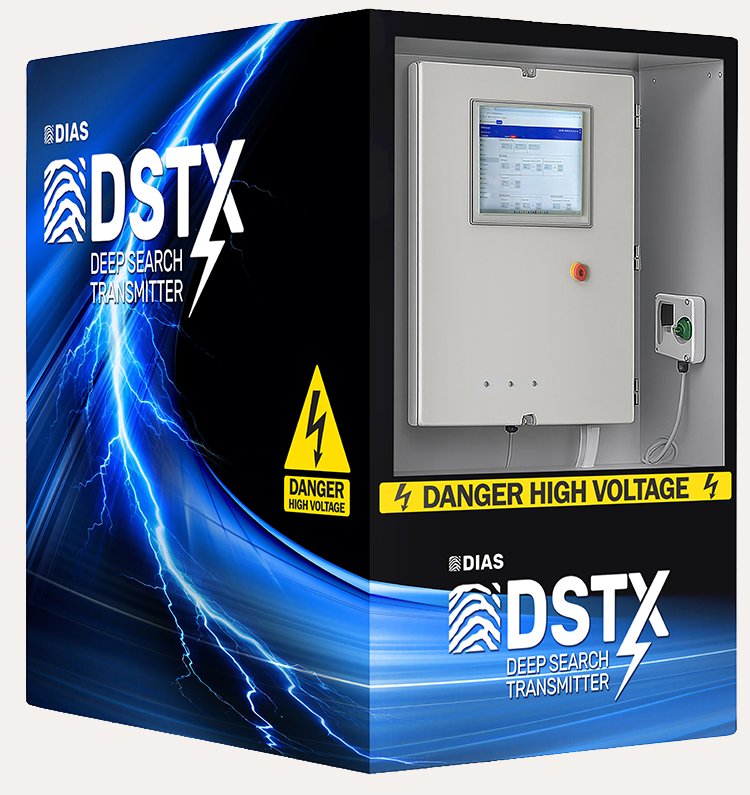 The DSTX is the most powerful deep mineral exploration transmitter in the world and designed to complement Dias’ patented DIAS32 3D IP distributed array technology, and Caravel, its AI-leveraged, cloud-based software platform.
DSTX delivers 2.5× more power than any other transmitter, enabling deeper, more efficient surveys, and more accurate models while reducing emissions through its innovative energy storage system.
Designed for large-scale exploration, DSTX’s increased power enables deeper target investigation, faster identification of prospective mineral systems, and better-informed exploration decisions.
QAMT: Taking Quantum Technology Airborne
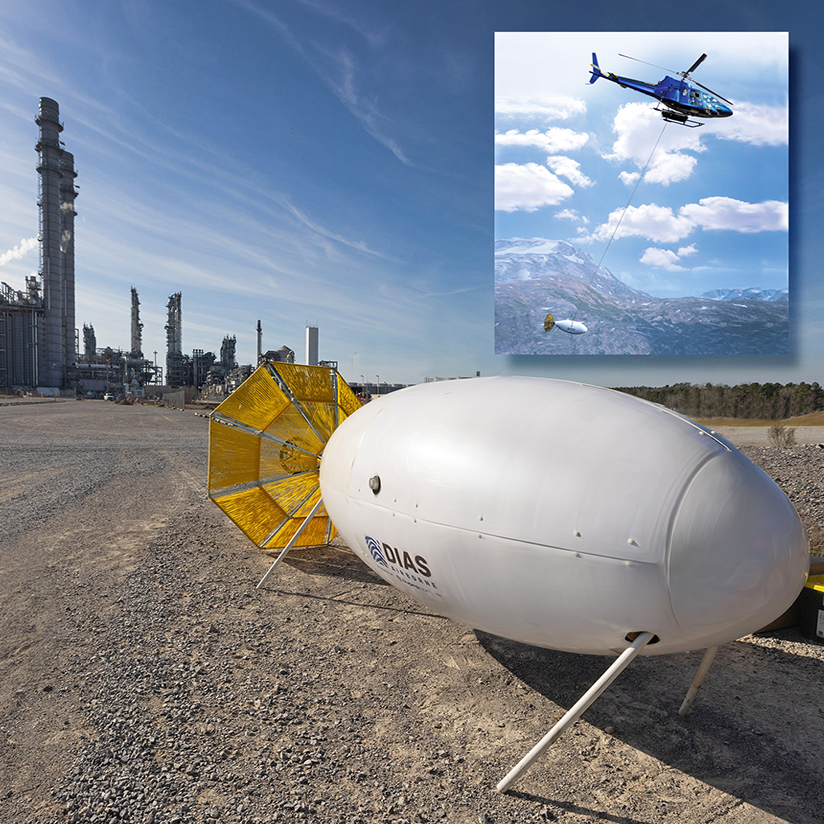 QAMT uses naturally occurring electromagnetic signals generated by solar and atmospheric activity to image the subsurface to depths exceeding one kilometre.
QAMT – Quantum Airborne MagnetoTellurics, was developed in partnership with German quantum technology company Supracon AG. The heart of the system is a Supracon SQUID (Superconducting QUantum Interference Device) sensor which is among the most sensitive magnetometers ever developed.
Adapting this technology for operation aboard a rapidly moving helicopter has required years of engineering and the development of complex motion-correction algorithms. The resulting data is unmatched and will support mineral exploration programs around the world combining deep subsurface imaging with the speed and extensive coverage of airborne surveys.
Supporting Canada’s Critical Minerals Future
Improving the ability to locate new deposits in an earth-friendly way is an important part of developing the secure mineral supply chains Canada and its international partners require in the decades ahead.